ALVIS Chiropractic – Portland (NE Broadway)
2916 NE Broadway, Suite B, Portland, OR 97232
Chiropractic Adjustments, Wellness Care for TMJ disorder with Dr. Jerome Craig, D.C., LMT.
TMJ disorders (TMD) affect the jaw joint and chewing muscles, causing jaw pain, clicking and headaches. At both our Portland and Hood River clinics, ALVIS Chiropractic uses gentle jaw, neck and upper-back care plus posture and home-exercise guidance, and coordinates with your dentist when needed.
Medically reviewed by Dr. Andrew Alvis, D.C. · Last reviewed

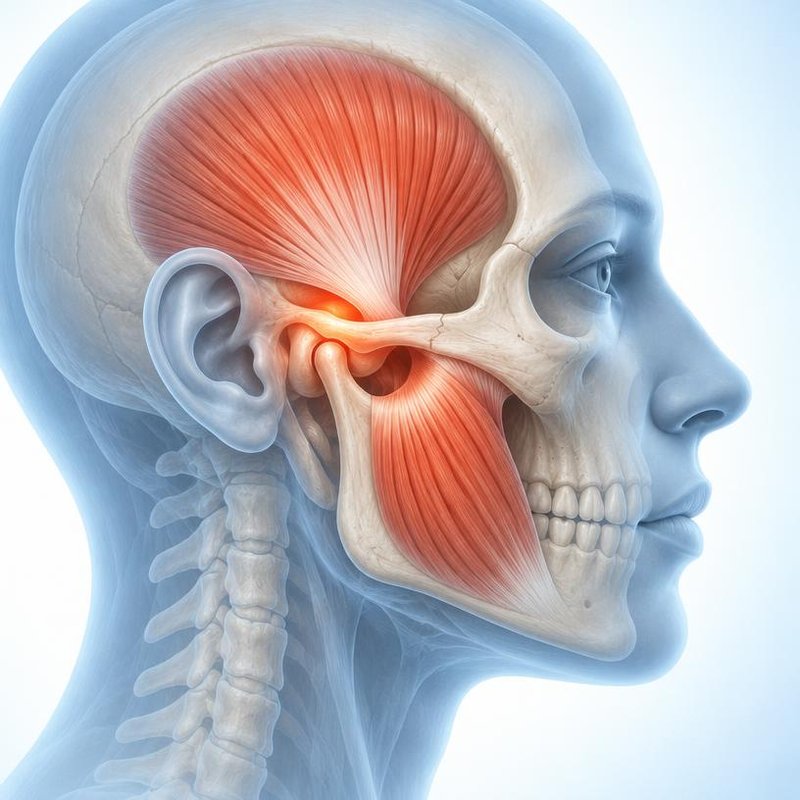
The temporomandibular joints (TMJs) are the two hinge-and-slide joints just in front of your ears that connect your lower jaw to your skull. Each joint has a small cushioning disc and is moved by strong chewing muscles, including the masseter along the side of the jaw and the temporalis at the temple. You use these joints every time you talk, chew, swallow or yawn.
Strictly speaking, “TMJ” is the joint and “TMD” (temporomandibular disorder) is the condition, although most people say “TMJ” for both. TMD is an umbrella term for pain and dysfunction in the joint, its disc or the surrounding muscles. Muscle-related jaw pain is the most common type, and many cases are mild and come and go.
Because the jaw sits on top of the neck, the two regions influence each other. Forward-head posture, a stiff neck and tension through the upper shoulders can change how the jaw muscles work. That's one reason a chiropractor looks at your neck and posture as well as your jaw.
TMD usually has more than one contributor, and the exact trigger isn't always clear. Habits that overwork the chewing muscles, changes in the joint itself and posture can all play a part, and stress tends to make symptoms worse.
Most jaw pain is not an emergency, but some symptoms need prompt medical or dental care instead of a chiropractic visit. Call 911 for chest pain or trouble breathing, and get same-day medical care for any of the following:
Chiropractic care for TMJ disorder uses gentle, conservative methods to help your jaw move more comfortably and to ease strain coming from the neck and upper back. Care is adapted to how your jaw feels on the day. The aim is comfortable motion and fewer flare-ups, not a quick fix.
Gentle jaw mobilization: the doctor uses light, controlled movements of the jaw joint to help improve opening and side-to-side motion. Neck and upper-back adjustments: because the jaw and neck work together, restoring motion in the upper spine may reduce the load on the jaw muscles.
Posture and ergonomics: small changes to how you sit, use screens and rest can reduce the forward-head posture and neck tension that add to jaw strain.
Jaw exercises and habit changes: you'll learn a relaxed resting jaw position (lips together, teeth apart, tongue resting lightly on the roof of your mouth), gentle opening exercises and simple ways to notice and stop daytime clenching.
When clenching or grinding at night is part of the problem, we coordinate with your dentist, who can decide whether a night guard is right for you. Research on chiropractic and other hands-on care for TMD is still developing, and individual results vary.
Services used for TMJ disorder:
Care for TMJ disorder at ALVIS Chiropractic follows three simple steps, starting with a free consultation. Nothing is decided until the doctor has heard your story and examined you, and there's no obligation to begin care.
These general tips are safe for most people. Stop anything that clearly worsens your symptoms and ask your doctor what's right for you.
2916 NE Broadway, Suite B, Portland, OR 97232
Chiropractic Adjustments, Wellness Care for TMJ disorder with Dr. Jerome Craig, D.C., LMT.
114 Cascade Ave, Hood River, OR 97031
Chiropractic Adjustments, Wellness Care for TMJ disorder with Dr. Andrew Alvis, D.C..
Results vary. This page is for education and is not a substitute for a medical evaluation. Healthcare disclaimer.
Chiropractic care may help many people with muscle- and posture-related TMJ pain. At ALVIS, care combines gentle jaw mobilization, neck and upper-back adjustments, posture guidance and simple jaw exercises. The goal is more comfortable movement and fewer flare-ups. If your exam points to a dental, joint or medical problem that needs other care, we'll tell you and coordinate with your dentist or physician. Results vary.
Usually not on its own, but the neck often plays a role. The jaw and neck work together, so forward-head posture and neck tension can change how the jaw muscles work and make TMJ symptoms worse. Clenching, grinding, stress, injury and arthritis are other common contributors. That's why the exam at ALVIS looks at your neck and posture as well as your jaw.
Often, yes. Many cases of jaw pain are mild and improve within a few weeks with rest, soft foods and better habits, although symptoms can come and go. If pain lasts more than a couple of weeks, keeps coming back or makes eating and talking difficult, an evaluation can help find what's driving it. A jaw that locks open or closed needs prompt care.
It depends on the cause, and many people benefit from both. A dentist is the right first call for tooth pain, bite problems or grinding that may need a night guard. A chiropractor can help with the jaw, neck and posture side of the problem. At ALVIS, we coordinate with your dentist so the care you receive works together.
Yes. Tight chewing muscles can cause headaches around the temples, and because the jaw joint sits right in front of the ear, TMD can cause pain or a feeling of fullness around the ear. Ear pain with a fever, discharge or hearing loss should be checked by a physician, because it may be an ear problem rather than the jaw.
It depends on your exam, how long you've had symptoms, what's contributing to them and how you respond to care. The doctor will recommend a plan after your exam, review your progress regularly and focus on home habits so you can manage your jaw on your own. We won't promise a fixed number of visits.
Last updated . Educational information, not medical advice; individual results vary. Healthcare disclaimer.