Does spinal decompression hurt?
+
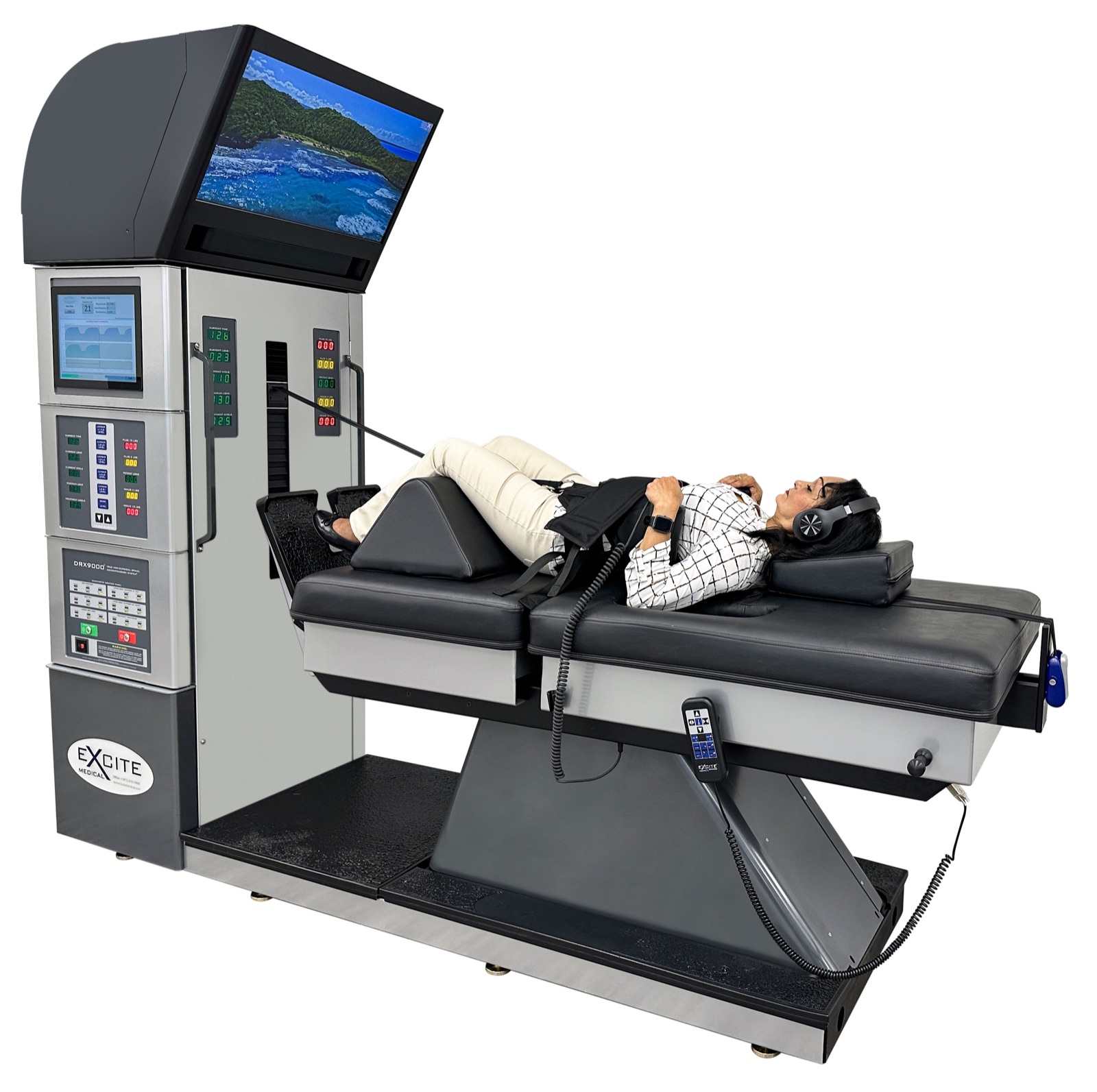
Most people don't find spinal decompression painful. You'll feel a gentle, gradual stretch as the table pulls and then relaxes. Many patients find sessions relaxing. If anything feels uncomfortable, tell Dr. Craig and the settings can be adjusted. Some people feel mild soreness afterward, similar to after a new stretch or exercise.
How is decompression different from a chiropractic adjustment?
+
A chiropractic adjustment is a quick, targeted movement applied to a specific joint to improve motion. Spinal decompression is a slow, computer-controlled stretch of the spine over about 30 minutes, designed to reduce pressure on discs and nerves. Many care plans use both together, with Dr. Craig deciding which fits your condition.
What makes the DRX9000 different from other decompression tables?
+
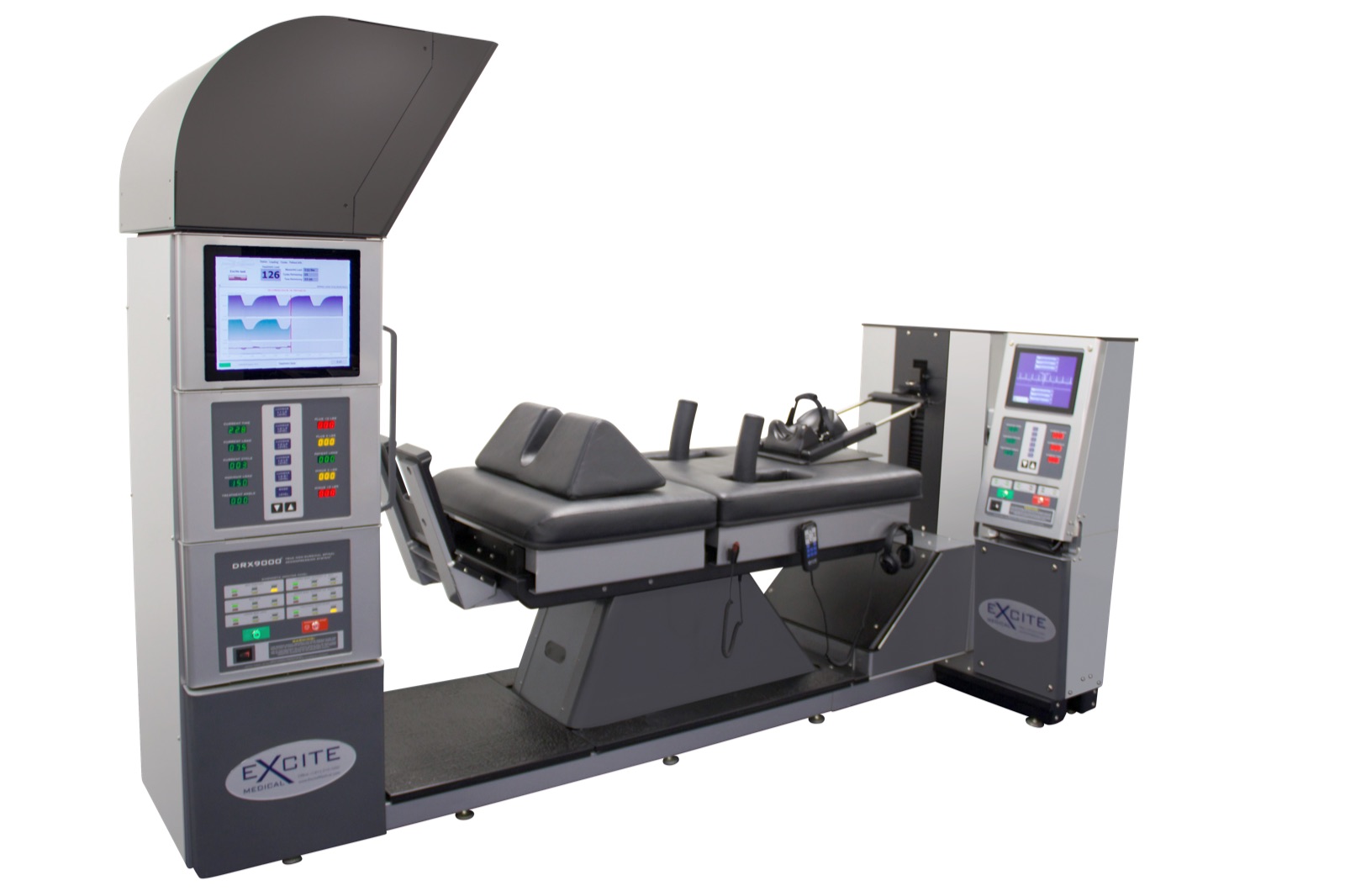
The DRX9000 is an FDA-cleared, computer-controlled system that adjusts its pull in real time based on how your muscles respond, and its treatment angle can be set to target a specific disc level in the low back or neck. That precision and comfort are why ALVIS chose it for our Portland clinic.
Is the DRX9000 FDA approved?
+
The DRX9000 is FDA-cleared through the 510(k) process, which is how the FDA reviews devices like this. Approval is a different pathway used for higher-risk devices. Its clearance covers the treatment of herniated discs, bulging discs, degenerative disc disease and posterior facet syndrome.
Is there research on DRX9000 spinal decompression?
+
Yes. A 2025 review of 267 patient records published in Military Medicine reported average pain dropping from 6.9 to 2.5 out of 10, and a 2025 University of South Florida case series found pain reductions and small increases in disc height on MRI. Both studies lacked control groups, so results vary and more research is needed.
Is spinal decompression covered by insurance?
+
Spinal decompression is often not covered by insurance, though plans vary. Our team can check your benefits before you start. If it isn't covered, we offer self-pay pricing, payment plans and CareCredit. We'll explain costs clearly at your free consultation so you can make an informed decision.
How many sessions will I need?
+
It depends on your exam, the condition and how you respond. The manufacturer's standard DRX9000 protocol is about 20 to 24 sessions over roughly six weeks, with more frequent visits at the start. Dr. Craig will recommend a plan after your exam and review your progress regularly instead of promising a fixed number.
Can spinal decompression help sciatica?
+
It may. When sciatica is caused by a herniated or bulging disc pressing on a nerve root, decompression is designed to reduce that pressure, and many patients with disc-related sciatica explore it. Sciatica has several possible causes, so Dr. Craig first examines you to find the likely source and decide whether decompression fits. Results vary.
Is spinal decompression safe after back surgery?
+
It depends on the surgery. A spinal fusion, or surgical hardware or implants in the area to be treated, usually means you are not a candidate. Some people who had other procedures may be evaluated. Bring your surgical history to your consultation, and Dr. Craig will tell you honestly whether decompression is appropriate.
Do you offer spinal decompression in Hood River?
+
No. Spinal decompression is offered only at our Portland clinic at 2916 NE Broadway, Suite B, with Dr. Jerome Craig. At our Hood River clinic, Dr. Andrew Alvis treats disc, back and neck conditions with chiropractic care and can refer you to Portland when your exam suggests decompression may help.
What happens at the free consultation?
+
At the free consultation you'll talk with Dr. Craig about your symptoms, history, any imaging you've had and your goals. He'll explain how decompression works and whether you may be a candidate, and outline next steps such as an exam. There's no cost and no obligation to start care.